
Everything About Piles: Cause, Types, Symptoms, Precautions & treatments- A Complete Factual Guide
Best Piles Laser Hospital in Bihar, Delhi/NCR and Tronica City, Ghaziabad (UP).
Piles (Hemorrhoids): Symptoms, Causes, Diagnosis and Treatment
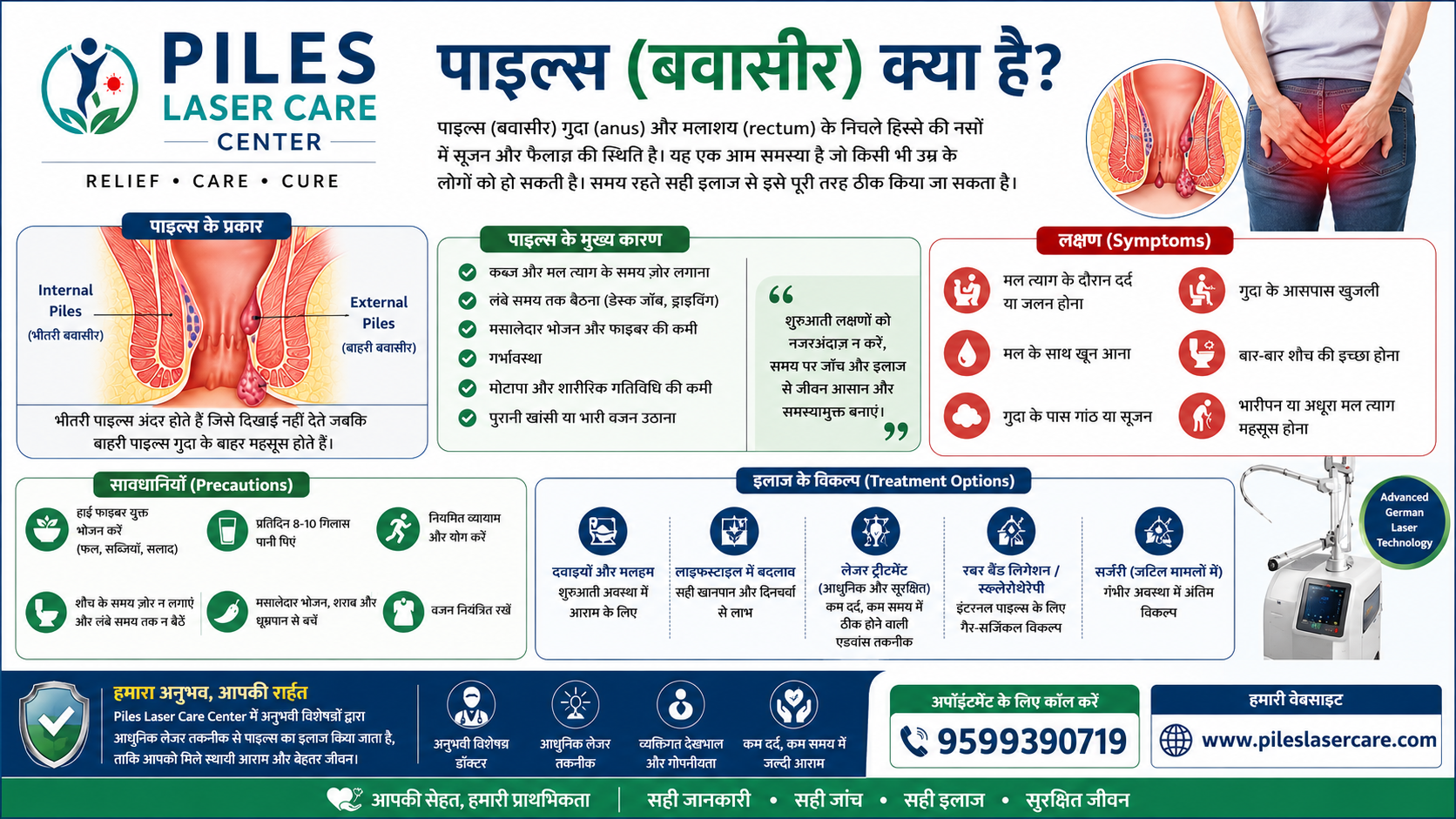
Piles, medically known as hemorrhoids, are swollen and enlarged blood vessels and supporting tissues in and around the lower rectum and anus. They are a common condition and can occur at different ages.
Piles may be internal, developing inside the rectum, or external, developing under the skin around the anus. Symptoms and treatment depend on the type, size, severity and complications associated with the hemorrhoids.
What Are Piles ?
Hemorrhoidal tissue is a normal part of the anal canal and contributes to bowel control. The problem occurs when these vascular cushions become enlarged, swollen or displaced.
Piles are broadly classified into:
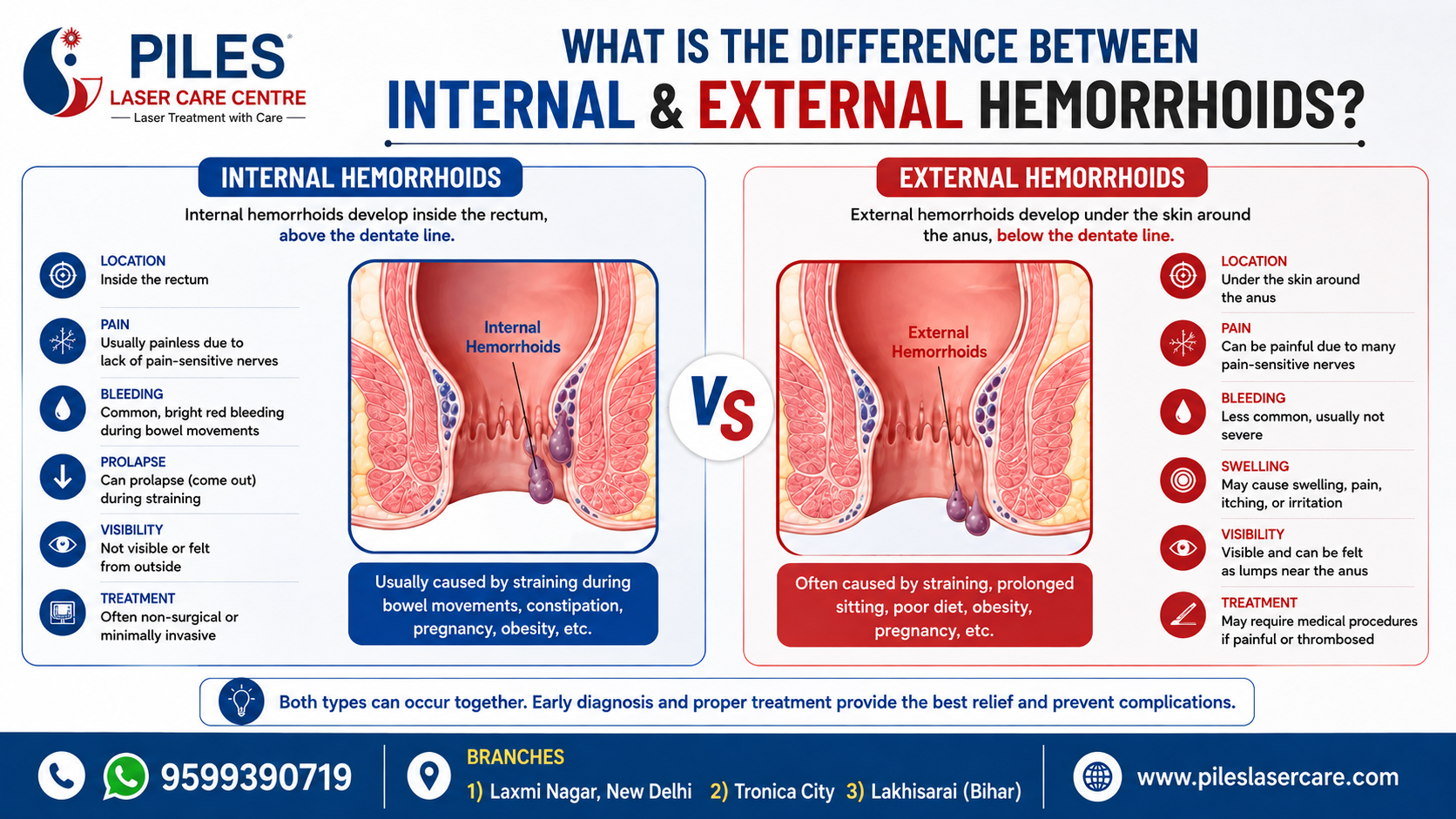
- Internal hemorrhoids – located inside the anal canal or lower rectum.
- External hemorrhoids – located beneath the skin around the anus.
Internal and external hemorrhoids can produce different symptoms, although some symptoms may overlap.
Internal Piles
Internal hemorrhoids develop above the dentate line inside the anal canal. They are commonly classified into four grades according to the degree of prolapse.
Grade I
The hemorrhoids remain inside the anal canal and do not prolapse outside during bowel movements.
Grade II
The hemorrhoids may protrude during straining or bowel movements but return inside spontaneously.
Grade III
The hemorrhoids prolapse during bowel movements and may require manual reduction.
Grade IV
The hemorrhoids remain prolapsed and cannot be pushed back inside easily.
The severity and symptoms can vary from person to person.
External Piles
External hemorrhoids develop beneath the skin around the anus.
They may cause:
- Pain or tenderness
- Swelling or a lump around the anus
- Irritation or itching
- Discomfort while sitting
- Bleeding in some cases
An external hemorrhoid can sometimes develop a blood clot (thrombosis). A thrombosed external hemorrhoid can cause sudden and significant pain and a firm or bluish lump near the anus.
Common Symptoms of Piles
Symptoms depend on the location and severity of the hemorrhoids.
Common symptoms include:
- Bright-red bleeding during or after bowel movements
- Itching or irritation around the anus
- Pain or discomfort
- Swelling or a lump around the anus
- Prolapse of internal hemorrhoids
- Mucus discharge in some cases
- Difficulty maintaining cleanliness after bowel movements
Rectal bleeding should not automatically be assumed to be caused by piles. Other conditions can also cause bleeding, so persistent or unexplained bleeding should be medically evaluated.
Why Do Piles Develop ?
Several factors can contribute to the development or worsening of hemorrhoids.
These may include:
- Chronic constipation
- Straining during bowel movements
- Frequent or prolonged sitting on the toilet
- Low dietary fibre intake
- Pregnancy
- Increased abdominal pressure
- Chronic diarrhoea
- Heavy lifting or repeated straining
- Increasing age
Often, more than one factor contributes to the condition.
Diagnosis of Piles
A doctor generally diagnoses hemorrhoids using the patient's medical history and physical examination.
Depending on the symptoms, evaluation may include:
1. Clinical Examination
The doctor examines the anal and surrounding area for external hemorrhoids, swelling, thrombosis or other abnormalities.
2. Digital Rectal Examination
A gloved finger may be used to examine the rectum.
3. Anoscopy
An anoscope may be used to examine the anal canal and identify internal hemorrhoids.
4. Additional Investigations
When bleeding or other symptoms could have another cause, additional investigations such as sigmoidoscopy or colonoscopy may be recommended depending on age, symptoms and clinical assessment.
Treatment of Piles
Treatment depends on the severity of the hemorrhoids and the symptoms experienced by the patient.
Not every patient requires surgery.
1. Dietary and Lifestyle Measures
For mild symptoms, doctors may recommend:
- Increasing dietary fibre
- Drinking adequate fluids
- Avoiding excessive straining
- Avoiding prolonged sitting on the toilet
- Maintaining regular physical activity
- Treating constipation appropriately
Fibre can help make stools softer and easier to pass.
2. Medicines and Conservative Treatment
Depending on symptoms, a doctor may recommend medicines or topical treatments for a limited period.
Treatment may be directed toward symptoms such as:
- Pain
- Itching
- Irritation
- Constipation
Self-medication should be avoided when symptoms are persistent, severe or recurrent.
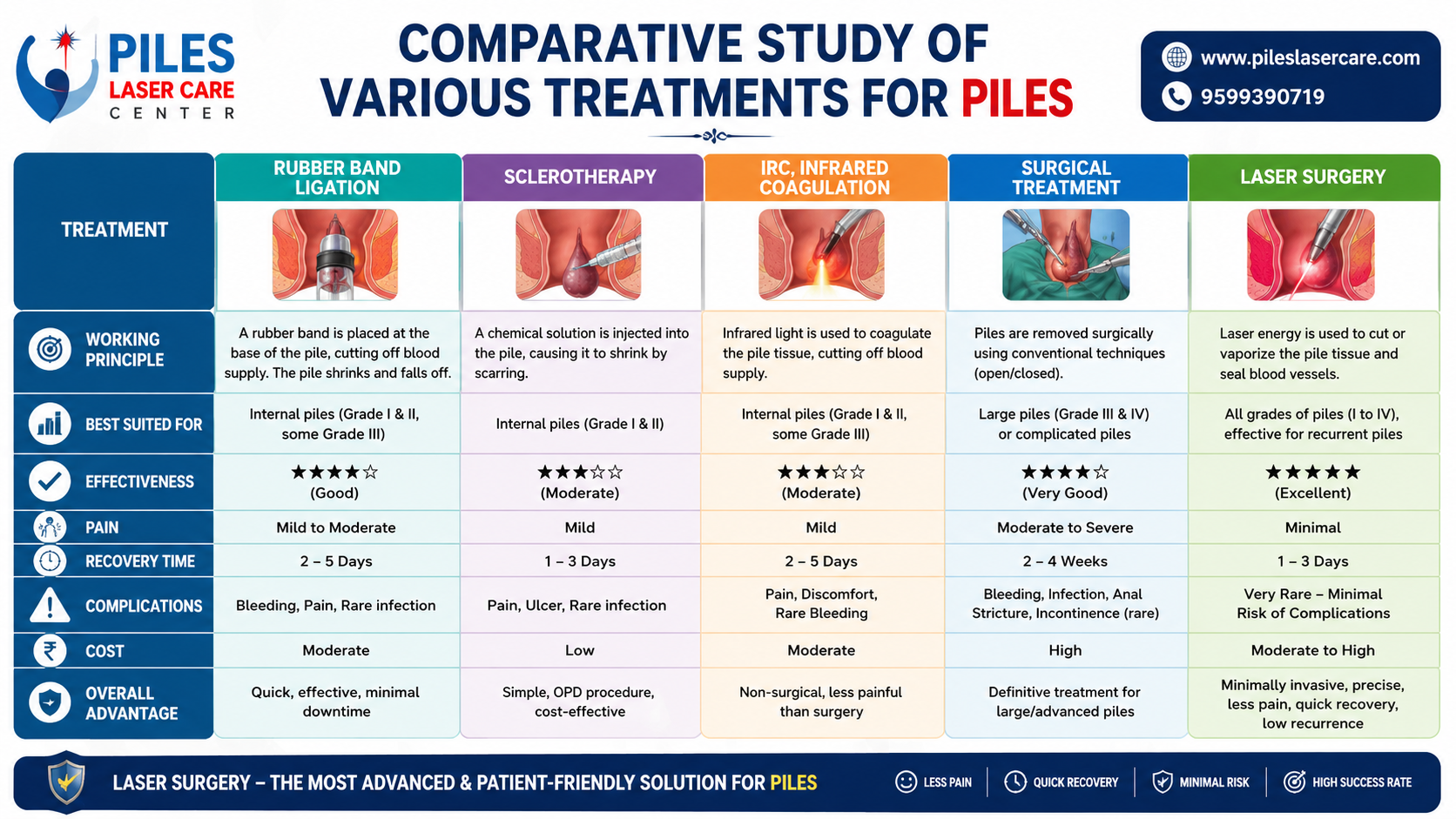
3. Rubber Band Ligation
Rubber Band Ligation (RBL) is commonly used for selected internal hemorrhoids, particularly those that prolapse.
A small rubber band is placed around the base of the hemorrhoidal tissue. This cuts off its blood supply, and the treated tissue subsequently shrinks and separates.
It is generally performed as an outpatient procedure.
4. Sclerotherapy
In sclerotherapy, a chemical solution is injected into selected internal hemorrhoidal tissue.
The injection causes changes in the tissue and can reduce bleeding. It is generally used for selected internal hemorrhoids.
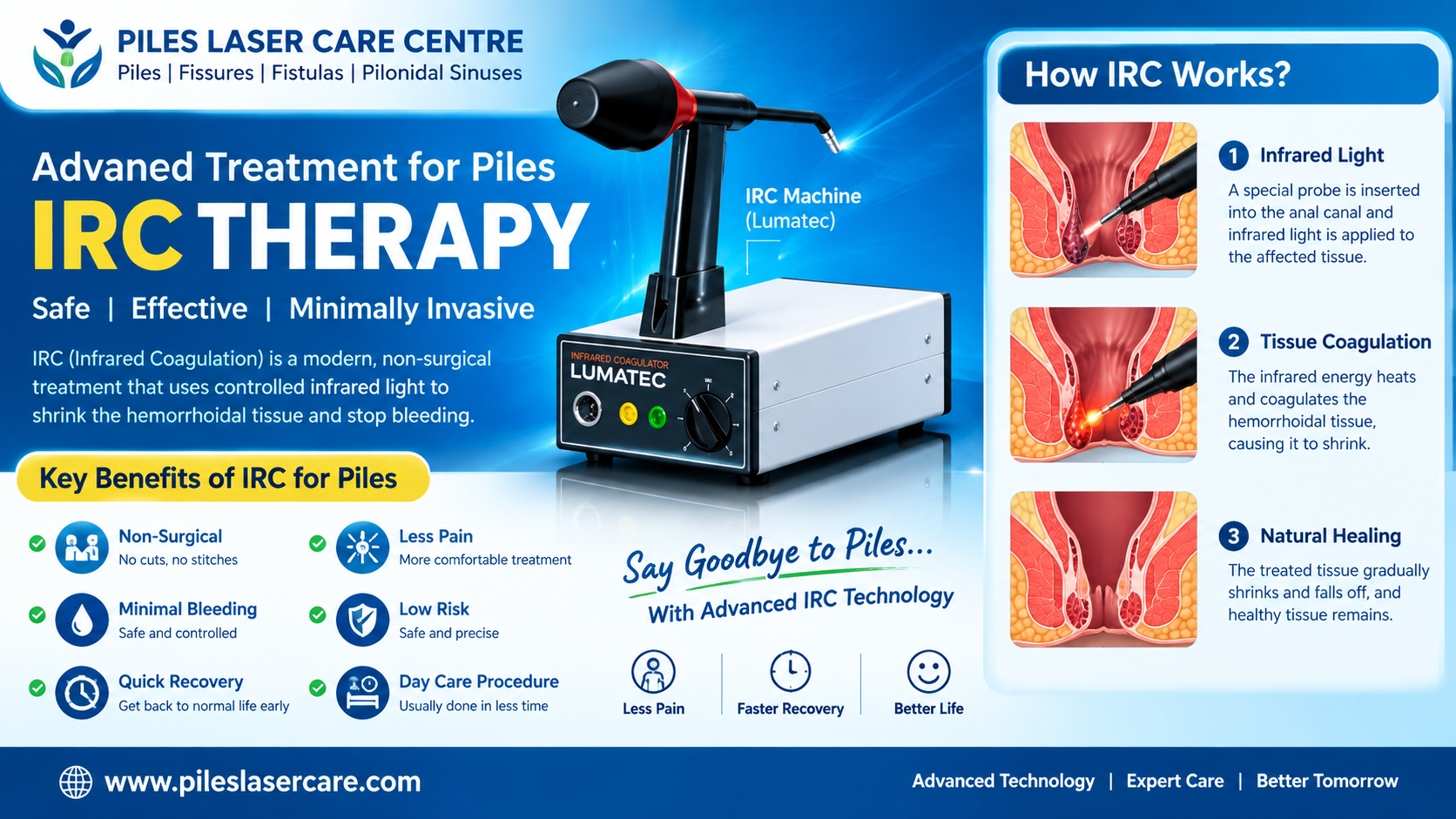
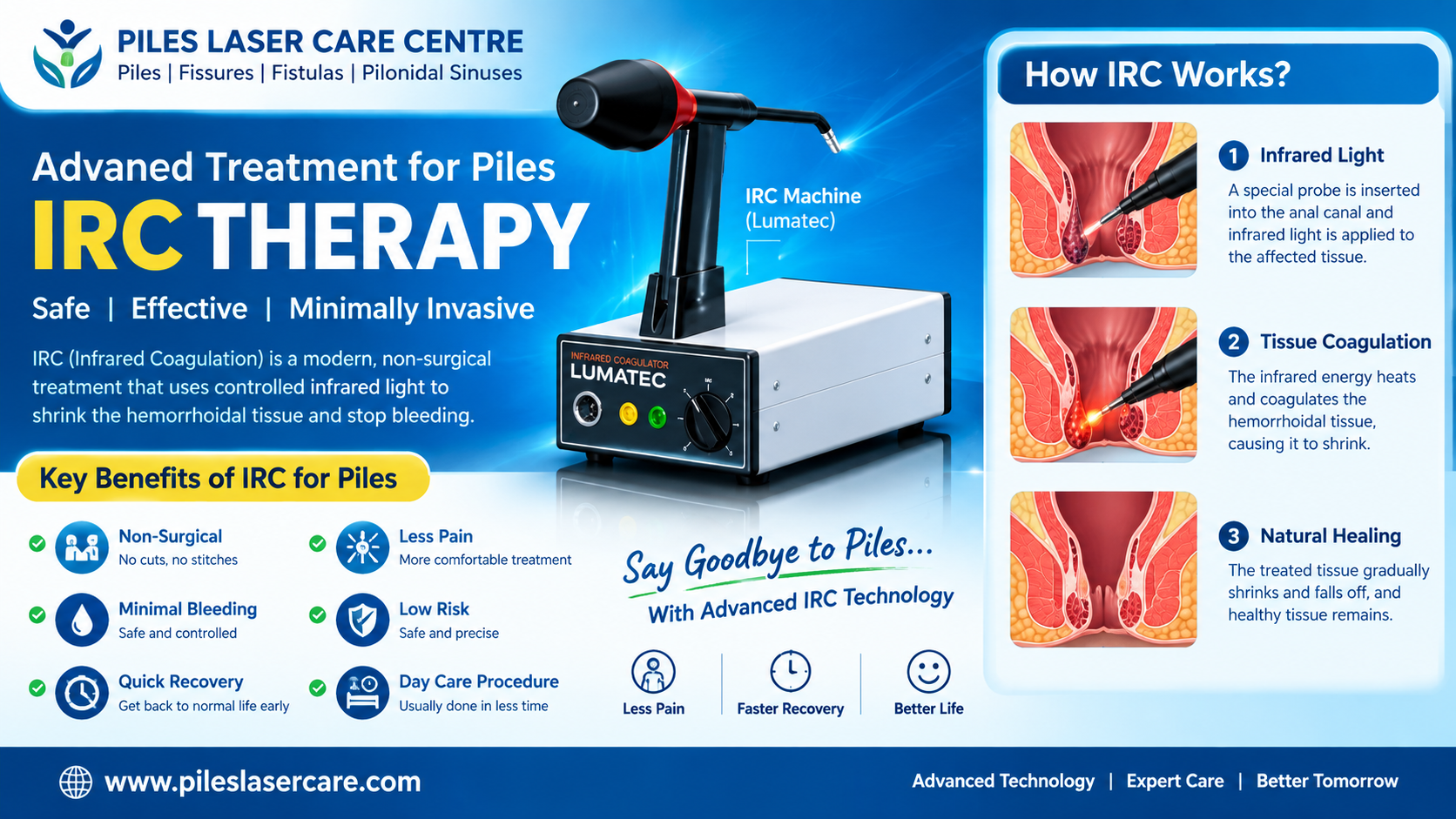
5. IRC – Infrared Coagulation
Infrared Coagulation (IRC) uses infrared energy to treat selected internal hemorrhoidal tissue.
The energy produces controlled coagulation of tissue and can reduce blood flow to the hemorrhoid.
IRC is generally considered for selected internal hemorrhoids, particularly when bleeding is a prominent symptom.
6. Surgical Treatment
When hemorrhoids are large, advanced, recurrent or associated with significant prolapse, surgical treatment may be considered.
One established surgical procedure is hemorrhoidectomy, in which hemorrhoidal tissue is surgically removed.
The appropriate surgical technique depends on the patient's condition and clinical assessment.
7. Laser Treatment for Piles
Laser techniques are used in selected patients with hemorrhoids. Different laser procedures have different techniques and indications.
One approach is laser hemorrhoidoplasty, in which laser energy is delivered to hemorrhoidal tissue with the aim of reducing the size of the hemorrhoid and its blood supply while preserving surrounding tissue.
Another technique, hemorrhoidal laser treatment, may be considered for selected patients depending on the type and severity of hemorrhoids.
Laser treatment is not automatically suitable for every patient. The appropriate treatment should be selected after clinical examination and assessment of the hemorrhoids.
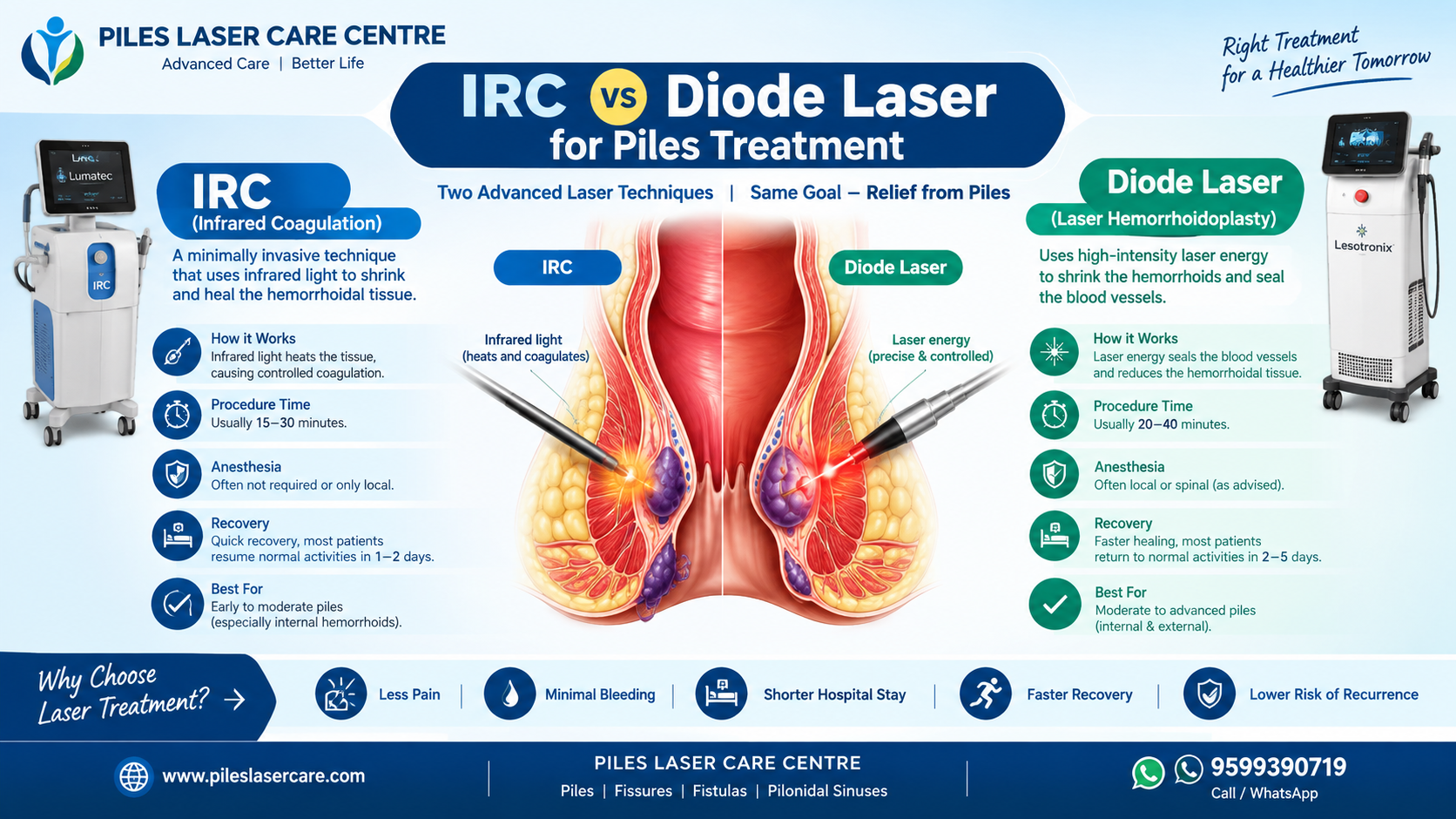
IRC vs Diode Laser
IRC and diode laser are different technologies and should not be considered identical procedures.
| FeatureIRCDiode Laser | ||
| Energy source | Infrared energy | Laser energy |
| Common use | Selected internal hemorrhoids | Selected hemorrhoidal conditions |
| Main objective | Controlled coagulation | Controlled laser energy delivery |
| Procedure | Usually minimally invasive | Minimally invasive technique depending on procedure |
| Suitability | Depends on hemorrhoid characteristics | Depends on hemorrhoid characteristics |
| Treatment decision | Clinical assessment required | Clinical assessment required |
The choice between IRC, laser treatment, medication, banding or surgery depends on the patient's diagnosis and severity.
Internal vs External Piles
| FeatureInternal PilesExternal Piles | ||
| Location | Inside anal canal/rectum | Under skin around anus |
| Bleeding | Can occur, often bright red | May occur, particularly with complications |
| Pain | Often less painful unless prolapsed/complicated | Pain can be prominent |
| Prolapse | Possible in advanced grades | Not classified by internal grades |
| Thrombosis | Less typical | Can occur |
| Treatment | Depends on grade and symptoms | Depends on symptoms and complications |
When Should You See a Doctor ?
Medical evaluation is particularly important when there is:
- Recurrent rectal bleeding
- Heavy or persistent bleeding
- Severe anal pain
- A painful lump around the anus
- Unexplained changes in bowel habits
- Persistent symptoms despite home measures
- Symptoms that are worsening or repeatedly returning
Rectal bleeding can have causes other than hemorrhoids. Therefore, proper diagnosis is important before starting treatment.
Can Piles Be Prevented ?
The risk of hemorrhoid symptoms may be reduced by maintaining healthy bowel habits.
Helpful measures include:
- Eating sufficient dietary fibre
- Drinking adequate water
- Avoiding unnecessary straining
- Responding to the urge to pass stool
- Avoiding prolonged toilet sitting
- Staying physically active
- Managing constipation
These measures can help reduce constipation and excessive straining, which are important contributors to hemorrhoid symptoms.
Frequently Asked Questions
Are piles and hemorrhoids the same thing ?
Yes. Piles is the commonly used term for hemorrhoids.
Do all piles require surgery ?
No. Treatment depends on the type and severity of hemorrhoids. Some patients improve with dietary and lifestyle measures or minimally invasive procedures.
Can internal piles become external ?
Internal hemorrhoids can prolapse through the anal opening, but internal and external hemorrhoids are anatomically different conditions.
Is bleeding always caused by piles ?
No. Rectal bleeding can have several causes. Persistent or unexplained bleeding should be evaluated by a qualified medical professional.
Is laser treatment suitable for everyone ?
No. Laser treatment is not appropriate for every patient. A doctor should determine the diagnosis and whether a particular laser procedure is suitable.
Which is better: IRC or laser ?
There is no single treatment that is appropriate for every patient. IRC and laser are different technologies, and treatment selection depends on the hemorrhoid type, severity, symptoms and clinical findings.
Conclusion
Piles are a common anorectal condition, but symptoms such as rectal bleeding, pain and anal swelling should not simply be ignored.
Treatment ranges from dietary and lifestyle measures to medicines, rubber band ligation, sclerotherapy, IRC, laser-based procedures and surgery. The appropriate option depends on the individual patient's diagnosis and severity.
A proper clinical examination is therefore important before choosing a treatment.
Piles Laser Care Centre
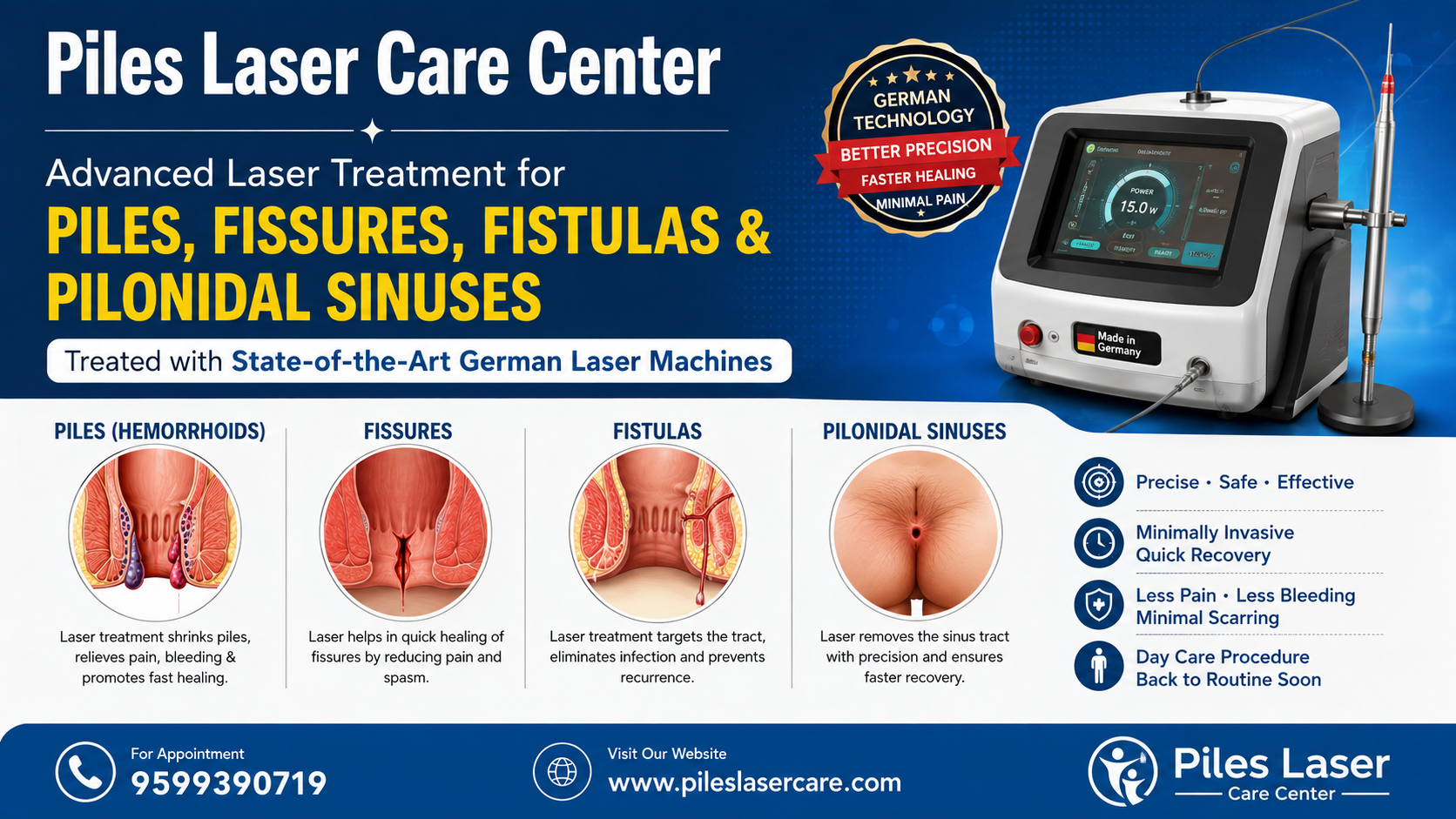
At Piles Laser Care Centre, patients can seek evaluation and treatment for anorectal conditions including piles, fissures, fistulas and pilonidal sinus.
Website: www.pileslasercare.com
Mobile & WhatsApp: 9599390719
Medical Disclaimer:
This article is provided for general health education and awareness. It does not replace examination, diagnosis or treatment by a qualified medical professional. Treatment decisions should be made after appropriate clinical evaluation.

Have these symptoms? Get checked early.
Book a private consultation with Dr. Amar Kumar at your nearest centre.
Book appointment