Everything About Anal Pilonidal Sinus: Causes, Symptoms, Precautions & Laser Treatment- A Complete Factual Guide.
A Factual Guide to Pilonidal Sinus Disease, Diagnosis, Prevention and Modern Minimally Invasive Treatment
Anal Pilonidal Sinus: Causes, Symptoms, Precautions & Laser Treatment
Pilonidal sinus is a common skin condition that usually develops in the cleft between the buttocks, close to the tailbone. It forms when hair and skin debris become embedded in the skin, creating a small opening or tunnel. The condition may remain quiet for a long time or may become infected, producing pain, swelling, pus or an abscess.
Although pilonidal sinus is sometimes casually described as an “anal” condition, it is generally located in the natal cleft near the tailbone rather than inside the anus. This distinction is important because an anal fistula is a different disease and requires a different evaluation and treatment.
What Is Pilonidal Sinus ?
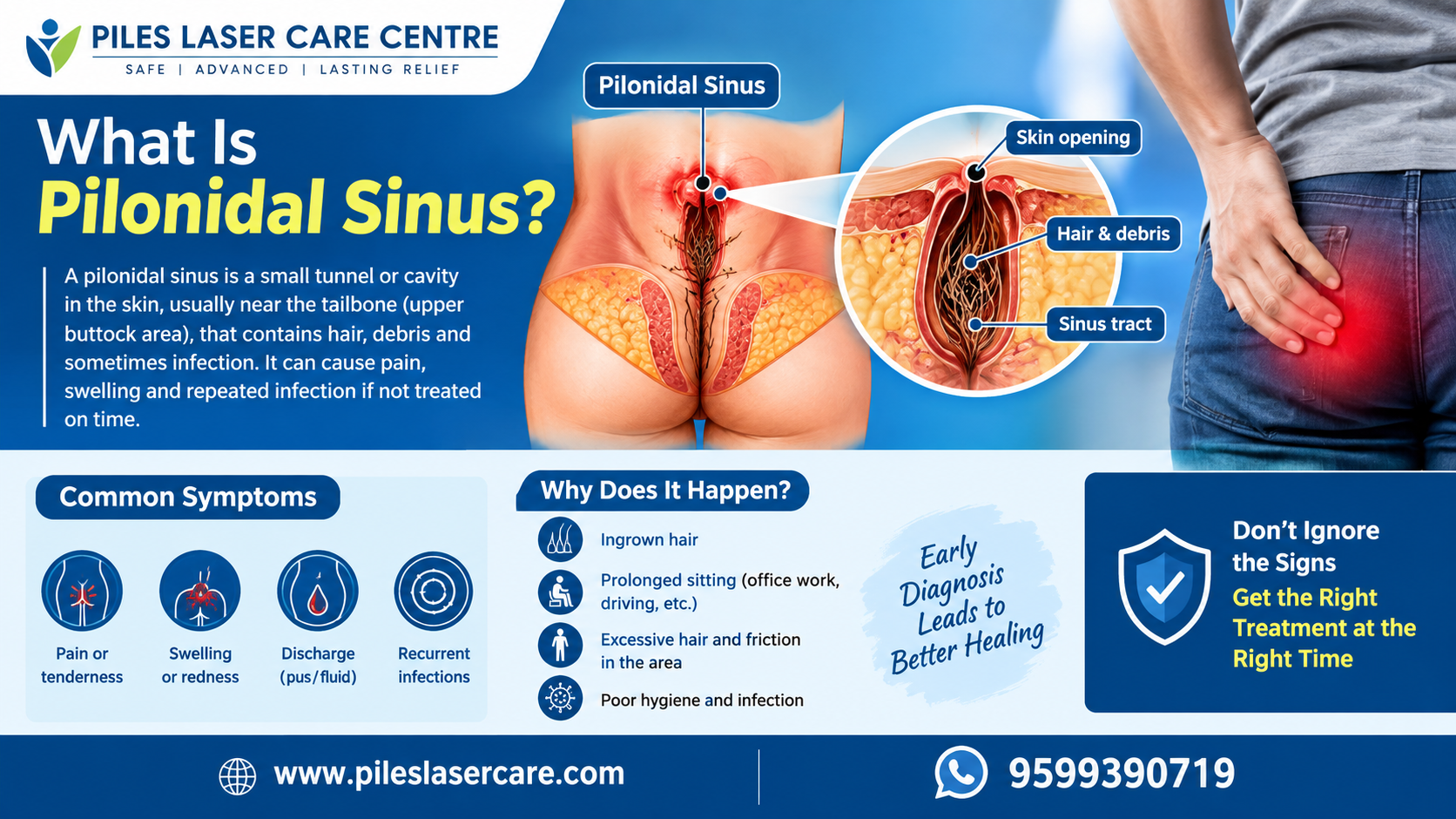
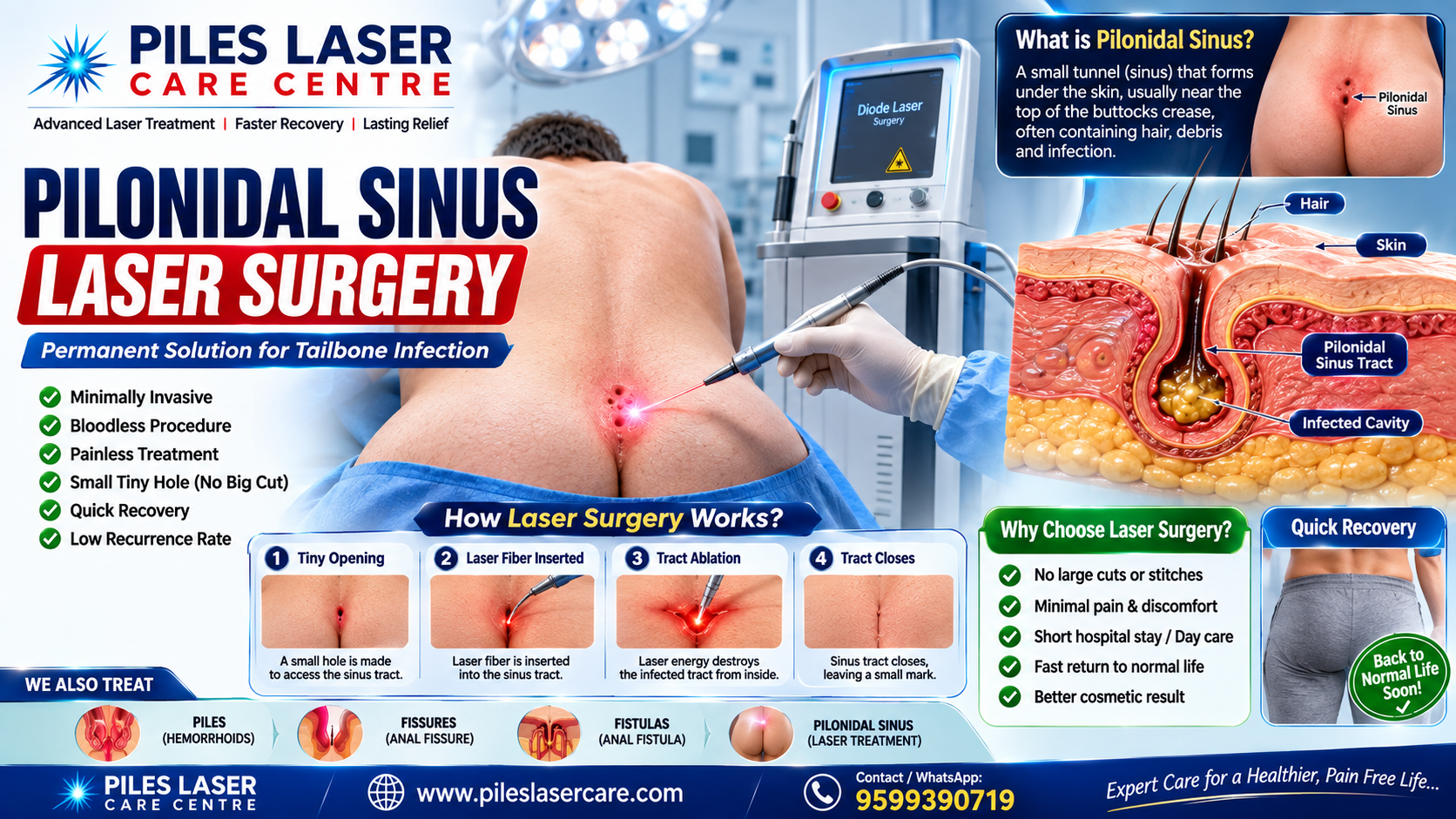
A pilonidal sinus is an abnormal tunnel or cavity beneath the skin, usually in the upper part of the buttock cleft. It may have one or more tiny openings called sinus pits.
Hair can enter or become trapped in these pits. Friction, pressure and local inflammation can then cause the surrounding tissue to become inflamed or infected. In some patients, an abscess develops and fills with pus.
The condition can be:
- Asymptomatic: a small pit without pain or infection
- Acute: sudden painful swelling or abscess
- Chronic: persistent or recurrent drainage from one or more openings
- Recurrent: the disease returns after previous treatment
Why Does Pilonidal Sinus Develop ?
There is no single cause in every patient. The condition is believed to involve hair penetration into the skin together with friction, pressure and inflammation.
Commonly associated factors include:
1. Hair and Hair Penetration
Loose or broken hairs can become trapped in the buttock cleft and penetrate the skin. This is considered an important mechanism in pilonidal disease.
2. Prolonged Sitting
People who spend long periods sitting—for example, office workers, drivers and students—may experience increased pressure and friction in the cleft.
3. Friction and Sweating
A deep cleft, sweating and repeated friction can create an environment in which hair and debris become trapped.
4. Obesity or Higher Body Weight
Higher body weight has been associated with pilonidal disease and may contribute through deeper skin folds, friction and moisture.
5. Local Hygiene and Hair Accumulation
Accumulation of loose hair and skin debris can contribute to blockage of the sinus openings. However, pilonidal sinus should not be considered simply a disease caused by poor hygiene.
6. Previous Pilonidal Disease
Someone who has already developed pilonidal disease may experience recurrent episodes.
Symptoms of Pilonidal Sinus
Symptoms depend on whether the sinus is infected.
Early or Mild Disease
Some people have no symptoms at all. Others may notice:
- A small pit or hole in the buttock cleft
- Mild discomfort while sitting
- Occasional moisture or discharge
- Small amounts of blood or fluid
- Local irritation
Infected Pilonidal Sinus
When infection develops, symptoms may appear rapidly and can include:
- Painful swelling near the tailbone
- Redness and tenderness
- Pus or foul-smelling discharge
- Bleeding from the sinus opening
- Difficulty sitting
- A painful lump or abscess
- Fever in more significant infections
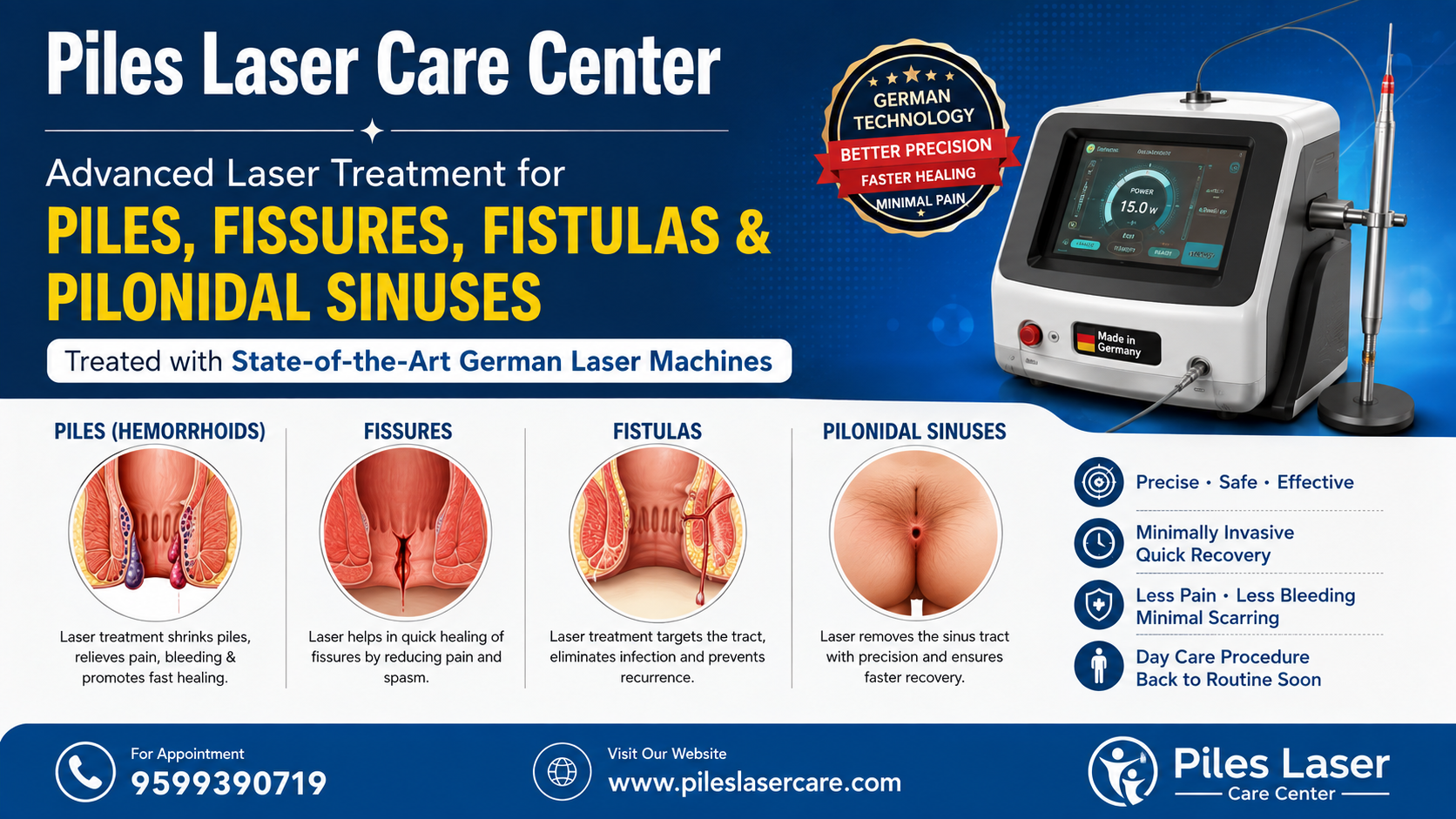
Painful swelling with pus or drainage can indicate an abscess and requires medical assessment.
Is Pilonidal Sinus the Same as Anal Fistula?
No.
This is an important distinction.
A pilonidal sinus usually develops in the skin of the buttock cleft near the tailbone and is commonly associated with hair.
An anal fistula is an abnormal tunnel connecting the anal canal or rectum to the skin around the anus, usually developing after an anorectal infection or abscess.
Because the two conditions can sometimes appear similar to patients, a proper clinical examination is important before choosing treatment.
How Is Pilonidal Sinus Diagnosed?
Diagnosis is usually based on:
1. Medical history
2. Examination of the buttock cleft
3. Identification of sinus pits or openings
4. Assessment for swelling, abscess and discharge
5. Evaluation of previous episodes or surgery
Imaging is not required in every straightforward case. A doctor may recommend additional investigations when the diagnosis is uncertain, disease is extensive or another condition needs to be excluded.
When Should You See a Doctor?
Do not ignore:
- Increasing pain or swelling
- Pus or persistent discharge
- Repeated bleeding
- A painful lump near the tailbone
- Fever
- Recurrent episodes
- A wound that does not heal
- Symptoms returning after previous surgery
An acute pilonidal abscess generally requires drainage rather than simply waiting for it to resolve. Antibiotics may be used in selected situations based on the clinical assessment.
Prevention and Precautions
There is no guaranteed way to prevent every case of pilonidal disease, but several measures may reduce irritation and recurrence.
Keep the Area Clean and Dry
Regular washing and careful drying of the buttock cleft can help maintain skin hygiene.
Reduce Prolonged Pressure
If your work involves sitting for many hours, take regular breaks and change position periodically.
Manage Excess Weight Where Appropriate
Maintaining a healthy body weight may reduce factors such as friction and deep skin folds.
Pay Attention to Hair Management
Hair control may be recommended in selected patients, particularly those with recurrent disease. Evidence suggests that laser hair removal/epilation can reduce recurrence in some patients.
Important: Do not aggressively shave an inflamed or infected area unless advised by a healthcare professional.
Do Not Squeeze an Abscess
Trying to squeeze or puncture a painful swelling yourself can worsen inflammation or infection.
Treatment Options for Pilonidal Sinus
Treatment depends on whether the disease is asymptomatic, acutely infected, chronic or recurrent.
1. Observation
A small pilonidal sinus without symptoms or infection may sometimes be managed conservatively with observation and appropriate hygiene.
2. Drainage of an Acute Abscess
When a painful abscess has formed, the primary treatment is usually incision and drainage to release the pus. This is different from definitive treatment of chronic pilonidal disease.
3. Conventional Surgery
Chronic or recurrent disease may require surgical treatment. Depending on the extent and anatomy, options include excision with open healing, closure techniques or flap procedures. More extensive or complex disease may require a different surgical approach.
4. Minimally Invasive Procedures
Modern treatment includes minimally invasive approaches such as endoscopic techniques and laser-based sinus ablation. Guidelines recognize minimally invasive approaches as options in appropriately selected patients, although they require appropriate equipment and expertise.
Laser Treatment for Pilonidal Sinus
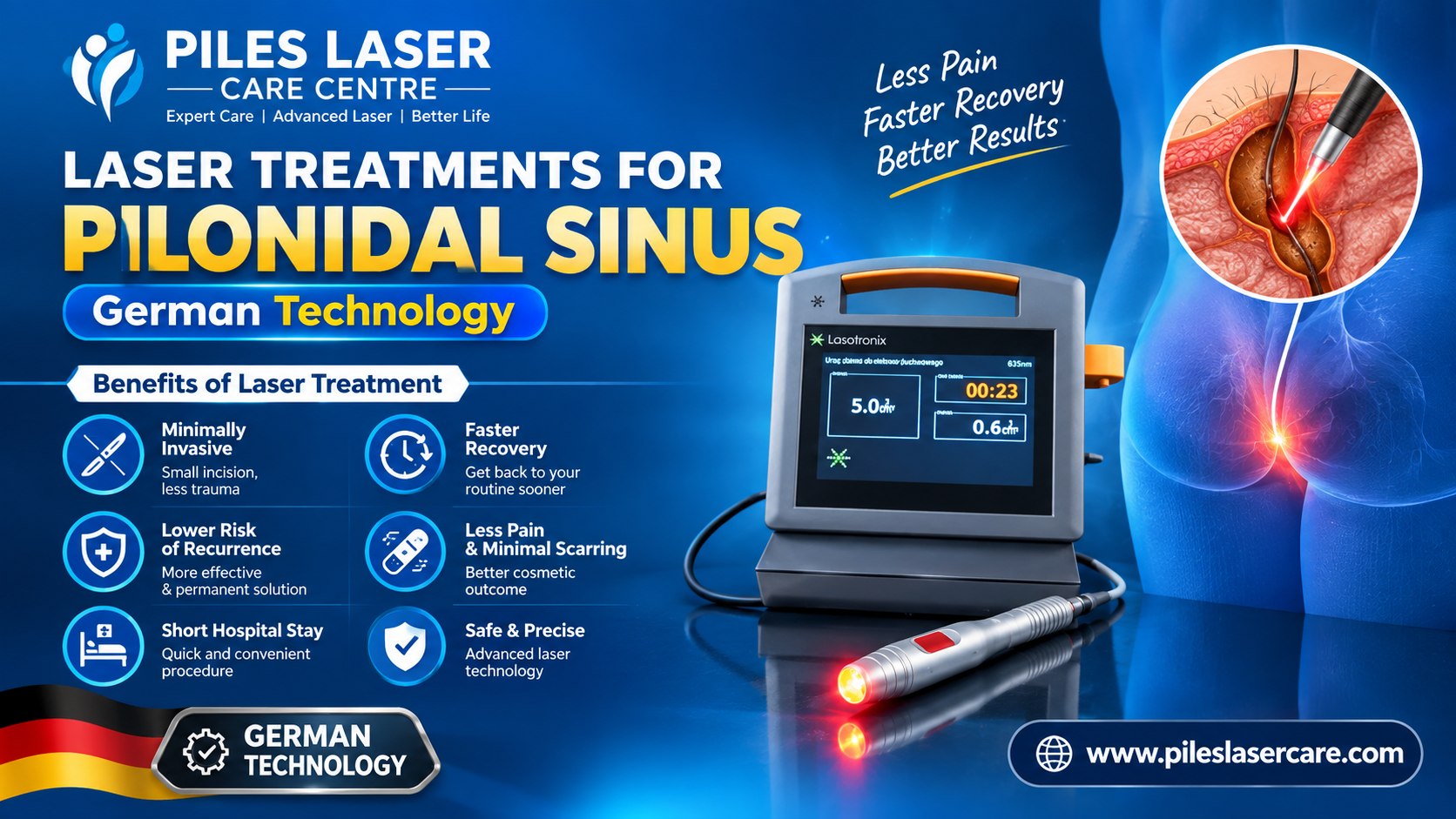
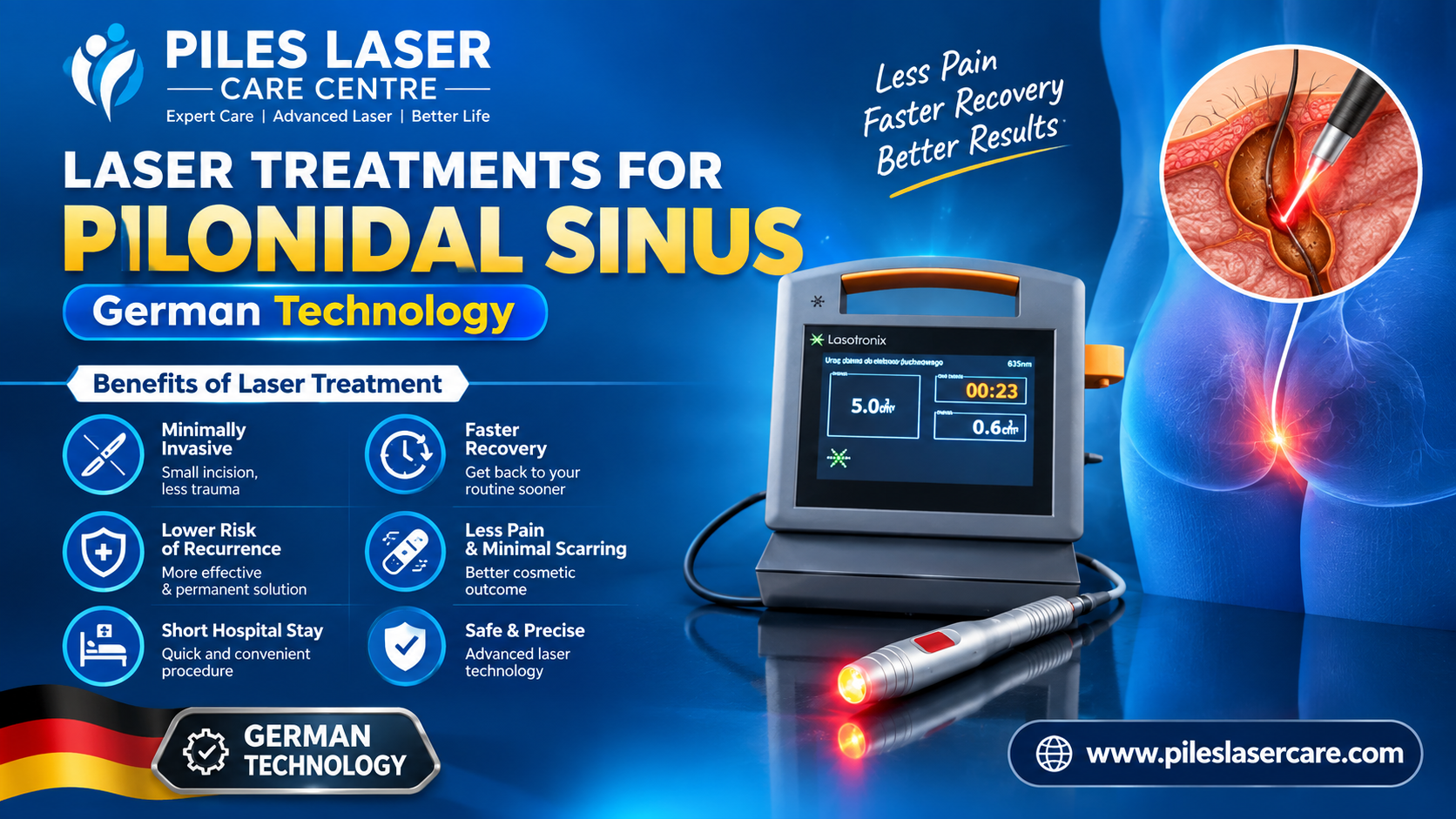
Laser ablation of pilonidal sinus is a minimally invasive technique in which the sinus tract is cleaned and a thin laser fibre is introduced into the tract. Laser energy is then delivered to treat the inner lining of the sinus, allowing the tract to close and heal from within.
Unlike traditional wide excision, laser procedures are designed to avoid removing a large amount of surrounding healthy tissue.
Potential Advantages
Depending on the individual case and technique used, potential advantages may include:
- Smaller treatment access
- Less tissue disruption
- Reduced postoperative discomfort compared with larger operations
- Less visible scarring
- Shorter recovery in appropriately selected patients
- Often performed as a day-care procedure
However, laser treatment is not automatically the best treatment for every patient. The appropriate technique depends on the number and location of sinus openings, the extent of disease, abscess formation, previous operations and other individual factors.
What Does Medical Evidence Say About Pilonidal Laser Treatment ?
Evidence for laser treatment has been encouraging, but it is important to interpret the results realistically.
A systematic review of 10 studies involving 971 patients reported a weighted mean recurrence rate of about 3.8% after laser treatment, with a median operative time of 26 minutes. However, the authors noted that much of the evidence involved relatively mild chronic disease and that larger randomized trials were needed to establish long-term superiority over other treatments.
More recent research continues to support laser ablation as a promising minimally invasive option, but outcomes vary according to patient selection, disease severity, technique and follow-up duration. A 2026 systematic review comparing SiLaC and EPSiT found broadly comparable efficacy, while also emphasizing that direct comparative trials remain limited.
For recurrent disease, a 2025 systematic review and meta-analysis reported a pooled healing rate of approximately 81.9%, while also noting that longer-term results require further high-quality research.
An Important Point About “No Incision”
Some laser techniques use only small access openings rather than the larger excisions used in conventional surgery. Therefore, claims such as “completely incision-free” should be interpreted carefully and should describe the exact technique being offered.
Similarly, treatment time varies by patient and disease complexity. A published systematic review found median operative time of 26 minutes, while individual procedures can be shorter or longer.
Is Laser Treatment Suitable for Everyone ?
No.
A surgeon should assess the disease before recommending laser treatment. Factors that may influence treatment selection include:
- Acute abscess
- Number of sinus tracts
- Extent and complexity of disease
- Recurrent disease
- Previous surgery
- Presence of extensive scarring
- Individual anatomy
- Overall health
For an acute abscess, drainage is generally the priority. Definitive treatment may be considered after the acute infection has been addressed.
What Happens After Laser Treatment ?
Post-treatment care varies according to the technique and the patient's condition.
Generally, patients may be advised to:
- Keep the area clean and dry
- Follow wound-care instructions
- Avoid excessive friction or pressure initially
- Take prescribed medicines as directed
- Attend follow-up appointments
- Follow the doctor's instructions regarding activity and hair management
Seek medical attention if there is increasing pain, fever, significant bleeding, worsening swelling or foul-smelling pus.
Can Pilonidal Sinus Come Back After Treatment ?
Yes.
No treatment can honestly guarantee zero recurrence.
Recurrence depends on factors such as disease severity, treatment technique, wound healing, hair-related factors, body habitus and postoperative care. Even after successful treatment, preventive measures and follow-up can be important.
Laser hair epilation has shown evidence of reducing recurrence in randomized trials, although it is not appropriate or necessary for every patient.
Frequently Asked Questions
Is pilonidal sinus dangerous ?
Most cases are not life-threatening, but an untreated infection can produce a painful abscess and significant local inflammation. Fever or rapidly worsening symptoms require medical evaluation.
Can pilonidal sinus heal on its own ?
An asymptomatic sinus may sometimes be observed. However, a recurrent or infected sinus may continue to cause problems and may require treatment.
Is pilonidal sinus caused by poor hygiene ?
Not necessarily. Hair penetration, friction, pressure, anatomy and other factors contribute to the condition. Good hygiene is useful but does not guarantee prevention.
Can pilonidal sinus be treated with medicines alone ?
Medicines may help manage infection or symptoms in selected circumstances, but chronic sinus tracts often require a procedure for definitive treatment.
Is laser treatment painful ?
Pain varies according to the procedure, anesthesia, disease severity and individual sensitivity. Minimally invasive laser approaches are generally intended to reduce tissue trauma compared with larger excisional procedures.
How long does laser treatment take ?
Treatment time varies. A systematic review reported a median operative time of 26 minutes, while individual cases may take less or more time depending on complexity.
Can pilonidal sinus return after laser treatment ?
Yes. Recurrence remains possible, particularly in complex or recurrent disease. Patients should discuss expected outcomes and follow-up with their surgeon.
Final Takeaway
Pilonidal sinus is a treatable condition, but early assessment is important, particularly when there is pain, swelling, pus or recurrent discharge.
Treatment should be individualized. Observation may be appropriate for selected asymptomatic disease, acute abscesses generally require drainage, and chronic or recurrent disease may be treated using conventional surgery or minimally invasive techniques such as endoscopic or laser-based procedures.
Laser treatment can offer a minimally invasive approach for appropriately selected patients, with published studies showing promising healing and recovery outcomes. Nevertheless, patients should understand that results vary and that laser treatment does not guarantee zero pain, zero recurrence or suitability for every case.
If you have a painful lump, persistent discharge, recurrent swelling or a non-healing opening near the tailbone, consult a qualified surgeon for an examination and personalized treatment plan.
Medical Disclaimer
This article is intended for general patient education and does not replace an examination or individualized medical advice. Pilonidal sinus can resemble other conditions, including perianal fistula and skin infections. A qualified healthcare professional should establish the diagnosis before treatment.
For Piles Laser Care Centre
For information about available evaluation and minimally invasive treatment options, visit or contact the clinic directly

Have these symptoms? Get checked early.
Book a private consultation with Dr. Amar Kumar at your nearest centre.
Book appointment