
Everything About Anal Fistula: Causes, Symptoms, Diagnosis, Treatment & Prevention- A Complete Factual Guide
Best Piles Laser Care Clinic in Delhi/NCR, Tronica city, Ghaziabad & Lakhisarai (Bihar)
Anal Fistula: Causes, Symptoms, Diagnosis, Treatment & Prevention- A Complete Factual Guide
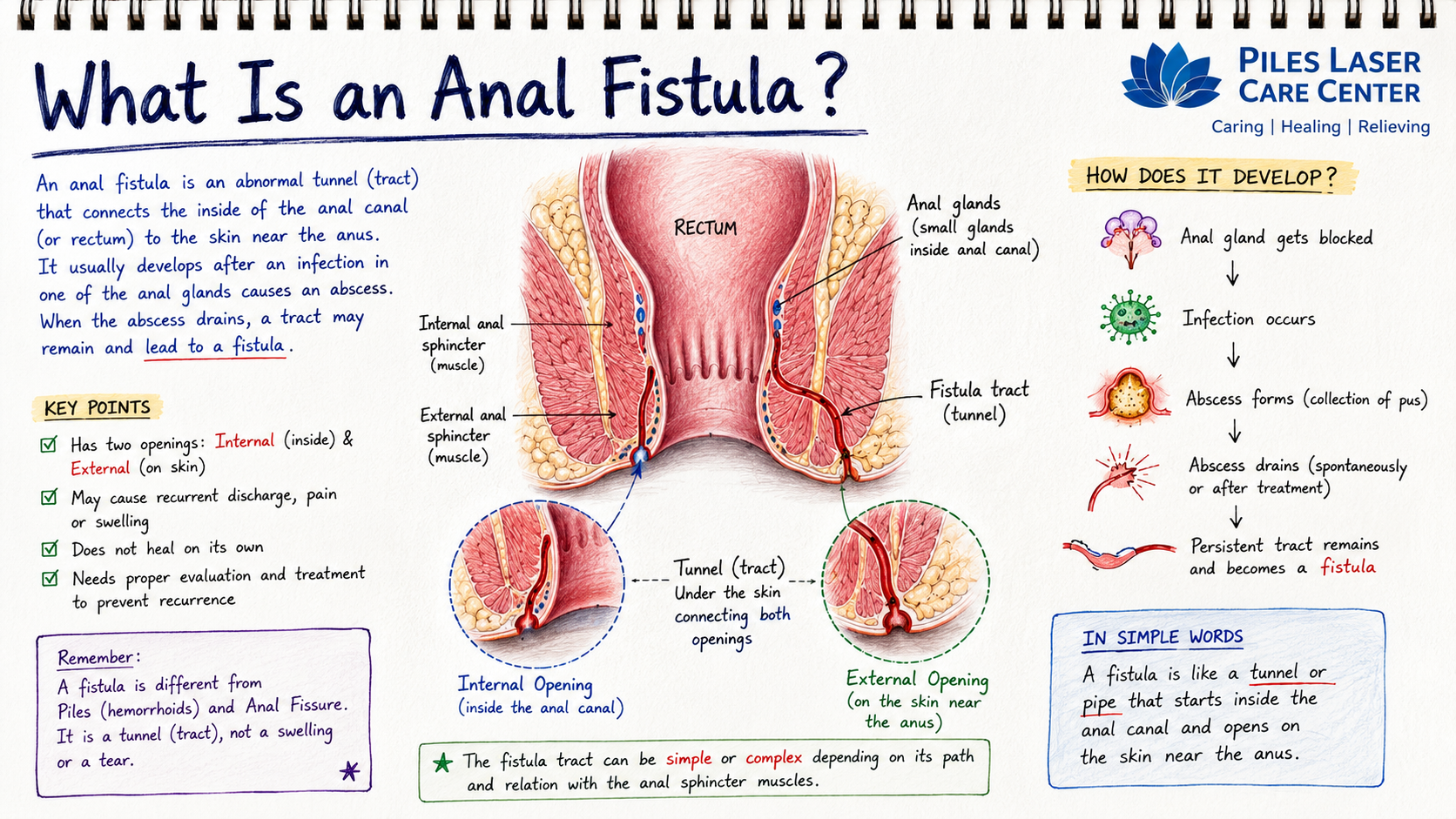
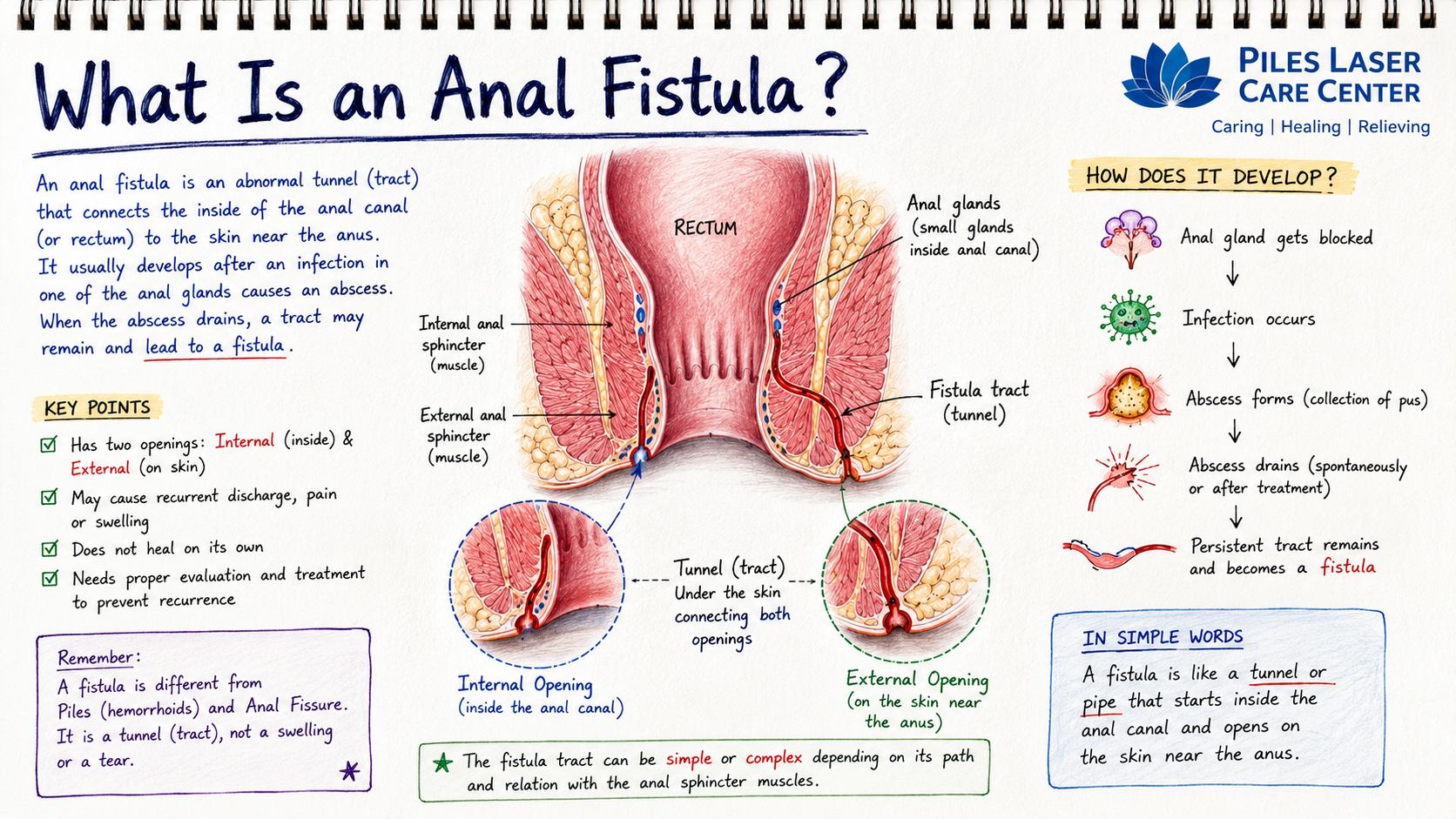
What Is an Anal Fistula?
An anal fistula is an abnormal tunnel (tract) that develops between the inside of the anal canal or rectum and the skin near the anus. It commonly develops after an infection in one of the small glands around the anus leads to an anal abscess. When an abscess drains—either spontaneously or after treatment—a persistent tract may remain and develop into a fistula.
An anal fistula is different from piles (hemorrhoids) and an anal fissure. While piles involve swollen blood vessels and a fissure is a tear in the anal lining, a fistula is an abnormal tract connecting two surfaces.
How Does an Anal Fistula Develop?
In many cases, the process begins with infection of an anal gland:
Blocked anal gland → Infection → Anal abscess → Drainage → Persistent tract → Anal fistula
An abscess may cause a painful, swollen area near the anus. Once the infection drains, the external opening may remain. If the underlying tract does not heal, recurrent drainage and infection can occur.
Not every anal abscess results in a fistula, but a fistula can develop after an abscess.
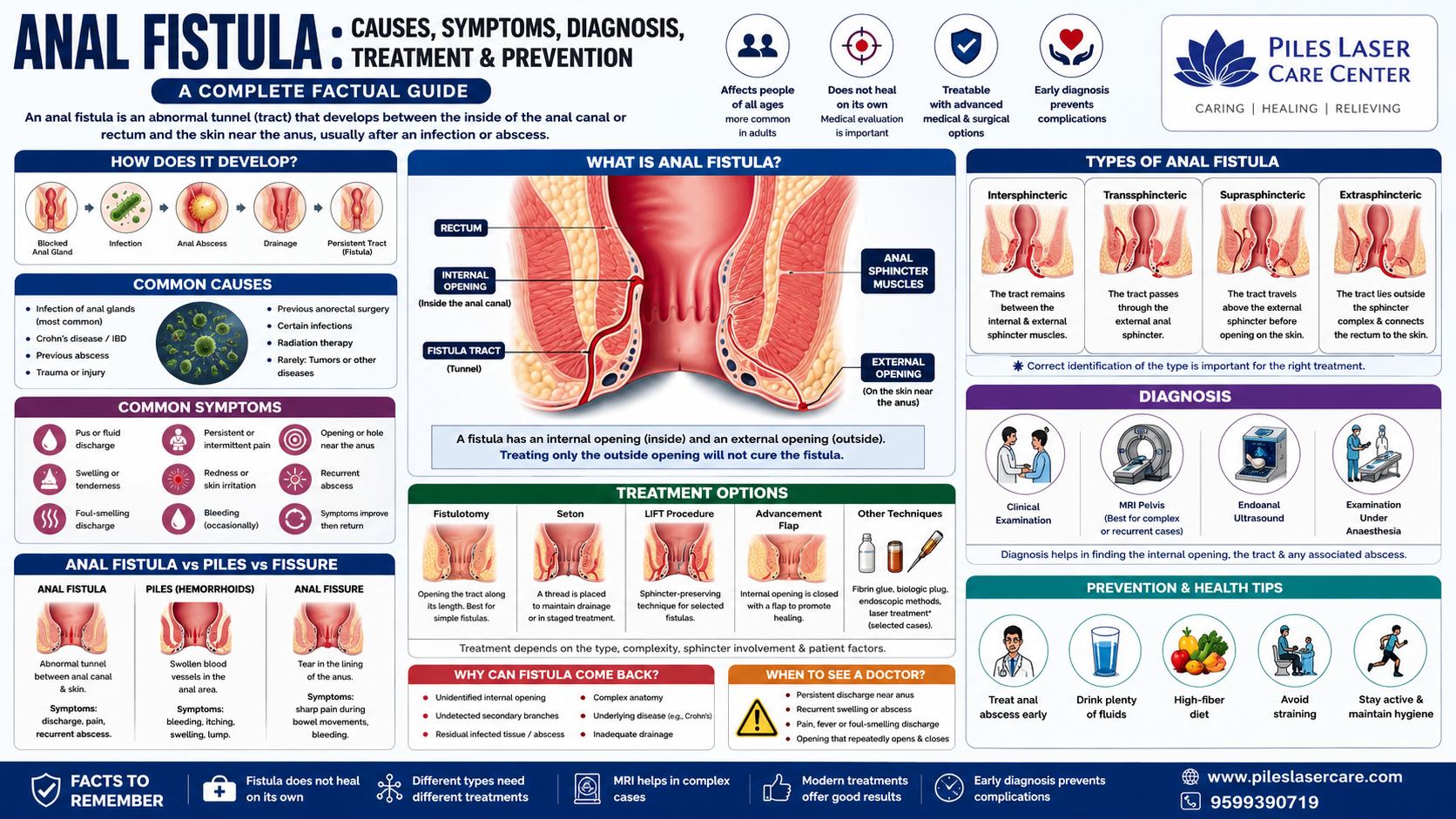
Common Symptoms of Anal Fistula:
Symptoms vary depending on the location and complexity of the fistula. Common symptoms include:
- A small opening or hole in the skin near the anus
- Recurrent pus or fluid discharge
- Persistent or intermittent pain around the anus
- Swelling or tenderness
- Redness or irritation of the surrounding skin
- Recurrent episodes of an abscess
- A foul-smelling discharge in some cases
- Bleeding occasionally
- Skin irritation caused by continuous drainage
- Temporary improvement after an abscess drains, followed by recurrence
A fistula can sometimes have periods when symptoms appear to improve before becoming active again.
What Causes an Anal Fistula ?
The most common cause is an infection of an anal gland followed by an abscess.
Other possible causes include:
- Crohn's disease
- Inflammatory bowel disease
- Previous anorectal surgery
- Trauma
- Certain infections
- Radiation treatment involving the pelvic region
- Rarely, tumors or other diseases affecting the anorectal area
A recurrent or unusually complex fistula may require evaluation for an underlying condition.
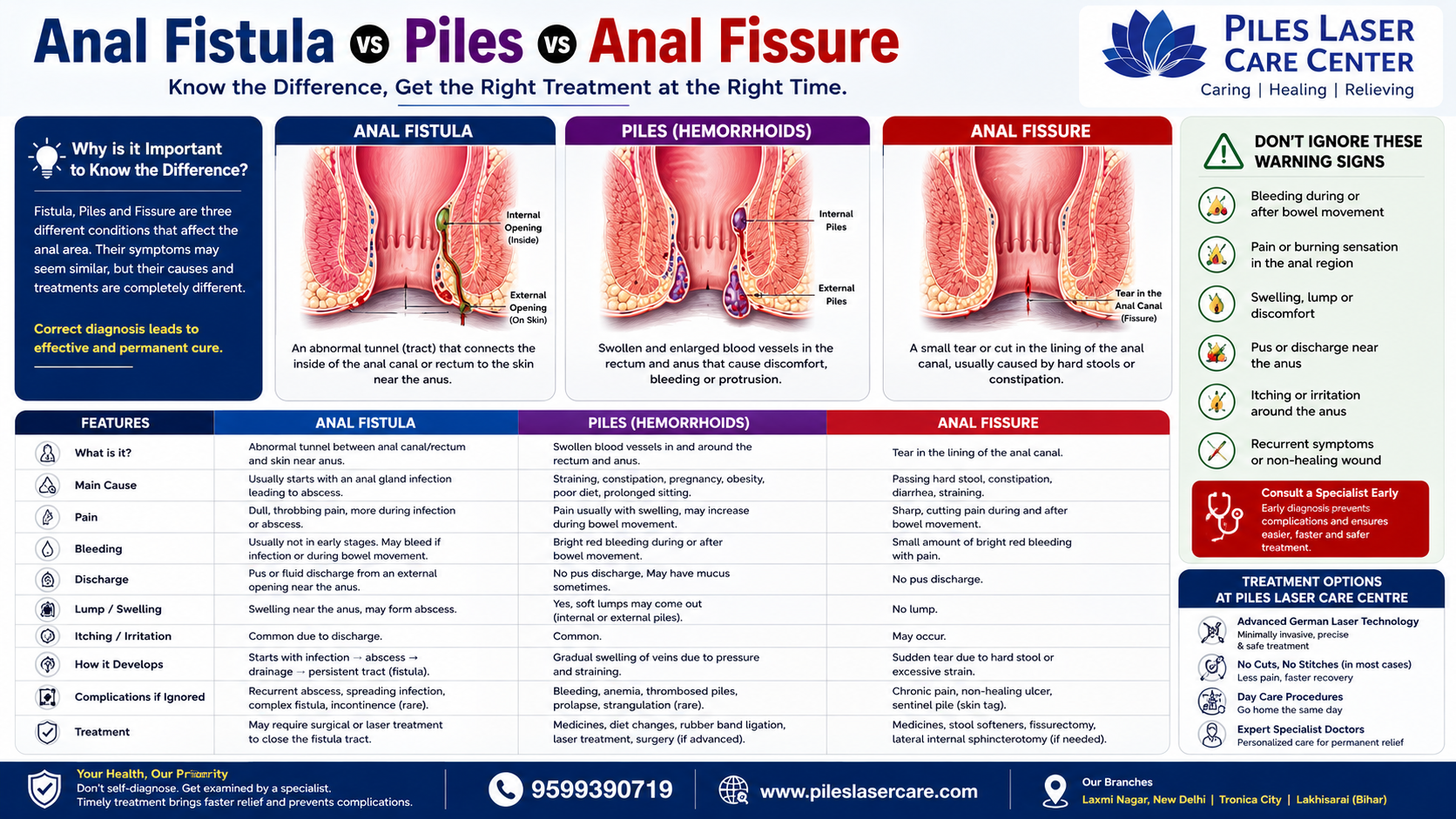
Anal Fistula vs Piles vs Anal Fissure
These three conditions are often confused because they all affect the anal region.
| ConditionWhat it isTypical features | ||
| Anal fistula | An abnormal tunnel between the anal canal/rectum and nearby skin | Recurrent discharge, external opening, recurrent abscess |
| Piles (Hemorrhoids) | Swollen and enlarged blood vessels/cushion tissue in the anal region | Bleeding, itching, swelling or a lump |
| Anal fissure | A tear in the lining of the anus | Sharp pain during or after bowel movements, sometimes with bright-red bleeding |
Accurate diagnosis is important because treatment is different for each condition.
Types of Anal Fistula
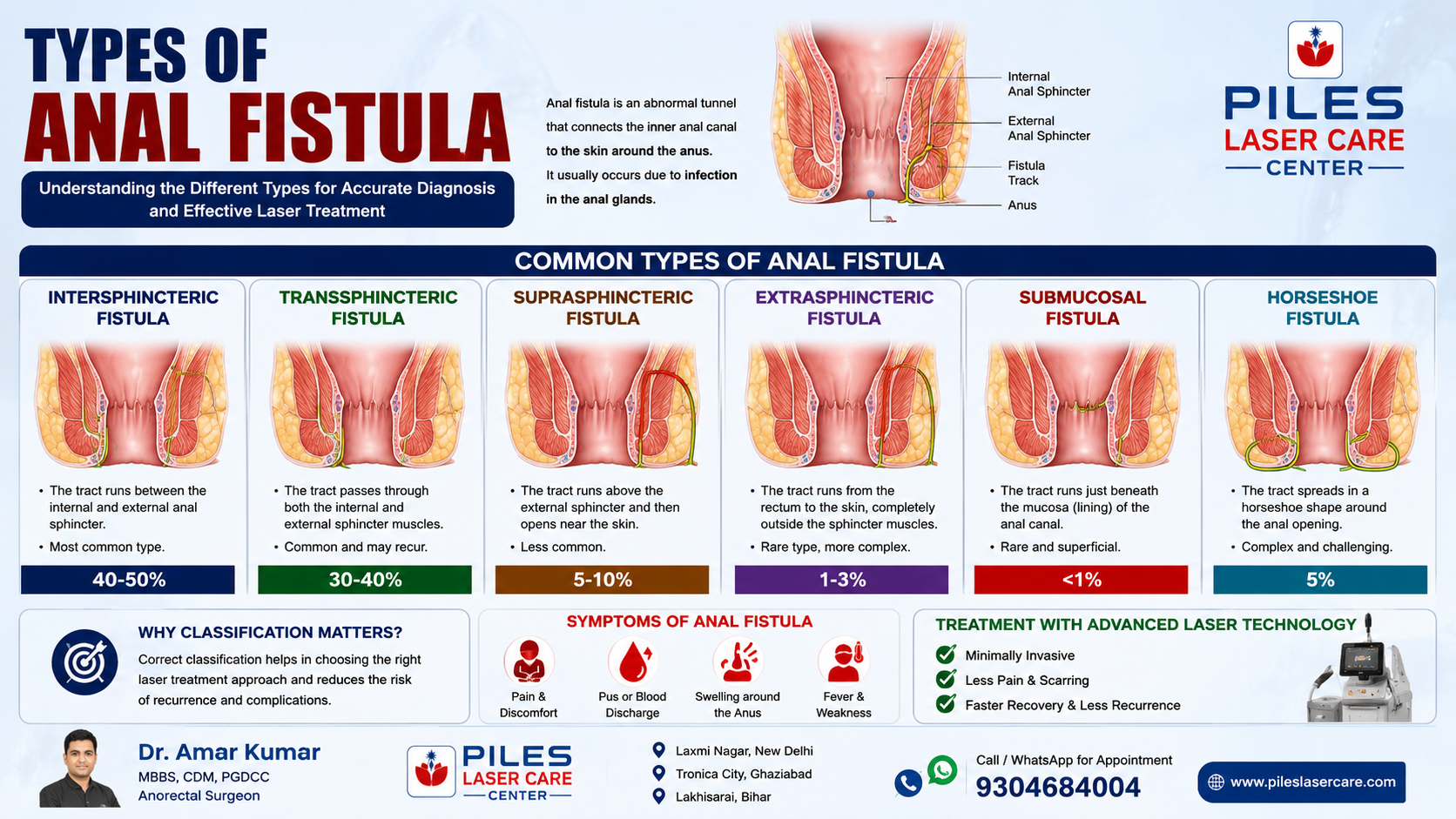
Anal fistulas are commonly classified according to their relationship with the anal sphincter muscles.
Important anatomical types include:
1. Intersphincteric Fistula
The tract remains between the internal and external sphincter muscles.
2. Transsphincteric Fistula
The tract passes through the external anal sphincter.
3. Suprasphincteric Fistula
The tract travels above the external sphincter before descending toward the skin.
4. Extrasphincteric Fistula
The tract lies outside the sphincter complex and may connect the rectum to the skin.
The exact anatomy matters because treatment must address the fistula while protecting normal continence.
How Is an Anal Fistula Diagnosed ?
Diagnosis begins with a medical history and physical examination.
A clinician may look for:
- An external opening
- Discharge
- Swelling
- Tenderness
- Scarring from previous abscesses
- The likely course of the fistula tract
Depending on the suspected anatomy, additional investigations may be recommended.
MRI Pelvis
MRI is particularly useful for complex, recurrent, or difficult-to-assess fistulas. It can help identify the course of the fistula, secondary extensions and associated abscesses.
Endoanal Ultrasound
Endoanal ultrasound can provide information about the anal sphincter and fistula anatomy in selected patients.
Examination Under Anaesthesia
In some cases, a detailed examination under anaesthesia is required to identify the internal opening and determine the anatomy of the tract.
The appropriate investigation depends on the individual case.
Why Is Finding the Internal Opening Important ?
A fistula generally has an external opening on the skin and an internal opening within the anal canal or rectum.
Simply treating the external opening may not eliminate the underlying fistula. Successful management requires understanding the complete tract and its relationship with the sphincter muscles.
This is one reason why specialist assessment is important, particularly for recurrent or complex fistulas.
Can an Anal Fistula Heal on Its Own ?
A true anal fistula usually does not reliably heal on its own.
The external opening may temporarily close, but if the underlying tract remains, infection can recur and another abscess may form.
For this reason, persistent drainage, recurrent swelling or repeated abscesses around the anus should be medically evaluated.
Treatment of Anal Fistula
Treatment depends on:
- The location of the fistula
- Whether the tract crosses the anal sphincter
- Whether an abscess is present
- Whether the fistula is simple or complex
- Previous operations
- Underlying diseases such as Crohn's disease
- The patient's continence status and other individual factors
There is no single procedure that is appropriate for every fistula.
Fistulotomy
Fistulotomy involves opening the fistula tract along its length so that it can heal from the inside outward.
It is commonly considered for suitable simple fistulas, particularly when only a limited amount of sphincter muscle is involved.
Seton
A seton is a surgical thread or similar material placed through the fistula tract.
Setons may be used to maintain drainage, control infection, or as part of a staged treatment strategy, especially when significant sphincter muscle is involved.
LIFT Procedure
Ligation of the Intersphincteric Fistula Tract (LIFT) is a sphincter-preserving surgical technique designed to treat selected fistulas while limiting division of the anal sphincter.
Advancement Flap
An endorectal or advancement flap can be used in selected cases to close the internal opening while avoiding extensive division of the sphincter.
Other Techniques
Depending on the anatomy and clinical circumstances, other approaches may include:
- Fibrin glue
- Biologic plugs
- Endoscopic or minimally invasive fistula techniques
- Laser-based fistula procedures in appropriately selected patients
The suitability and effectiveness of each technique vary according to fistula anatomy and patient factors.
What About Laser Treatment for Anal Fistula ?
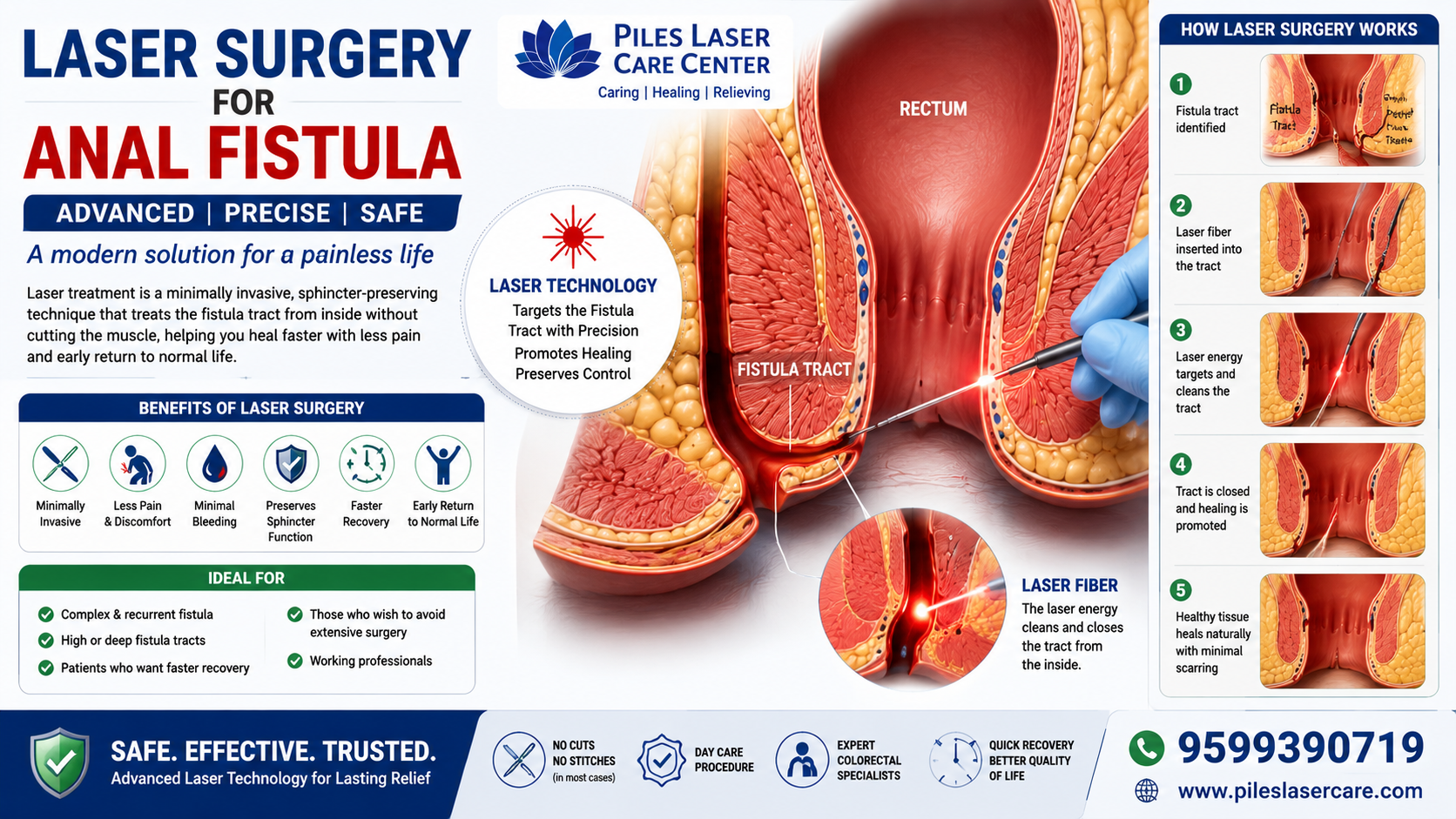
Laser-based techniques, including laser closure of the fistula tract, have been developed as sphincter-preserving approaches.
The principle is to use a laser fiber within the fistula tract to treat and close the tract while aiming to minimize injury to the anal sphincter.
However, laser treatment is not automatically appropriate for every fistula. The fistula's anatomy, internal opening, branches, abscesses, sphincter involvement and previous treatment must be assessed first.
Patients should discuss the expected benefits, limitations, recurrence risk and alternatives with a qualified colorectal or anorectal surgeon.
Why Can Anal Fistula Come Back ?
Recurrence can occur even after treatment.
Possible reasons include:
- An unidentified internal opening
- Undetected secondary branches
- Residual infected tissue
- An associated abscess
- Complex fistula anatomy
- Inadequate drainage
- Underlying Crohn's disease or another condition
- New infection or formation of another tract
Correct identification of the complete fistula anatomy is therefore an important part of treatment planning.
Can an Anal Fistula Be Prevented ?
Not every anal fistula can be prevented because many arise following an anal gland infection that cannot be predicted.
However, prompt medical attention for an anal abscess may help prevent prolonged infection and complications.
People with recurrent perianal abscesses or fistulas should be assessed for possible underlying conditions when clinically appropriate.
When Should You See a Doctor ?
Seek medical evaluation if you have:
- Persistent drainage near the anus
- A recurrent opening or wound near the anus
- Repeated painful swelling
- Recurrent abscesses
- Pus discharge
- Persistent anal pain
- A wound that repeatedly opens and closes
- Fever or worsening swelling associated with an anal infection
Severe pain, rapidly increasing swelling, fever, chills or feeling significantly unwell can indicate an abscess or spreading infection and require prompt medical assessment.
What Happens If an Anal Fistula Is Left Untreated ?
An untreated fistula can remain chronically active and may cause:
- Recurrent abscess formation
- Persistent discharge
- Ongoing discomfort
- Skin irritation
- Extension or branching of the fistula tract
- Repeated infection
The risk and clinical course vary considerably between individuals.
Recovery After Fistula Treatment
Recovery depends on the procedure and the complexity of the fistula.
Patients may be advised to:
- Keep the area clean
- Follow wound-care instructions
- Take prescribed medicines as directed
- Maintain soft stools through adequate fibre and fluids when appropriate
- Avoid straining during bowel movements
- Attend follow-up appointments
- Report increasing pain, fever, swelling or unusual discharge
Healing can take time, particularly after procedures where the wound is deliberately left open to heal gradually.
Diet and Lifestyle During Recovery
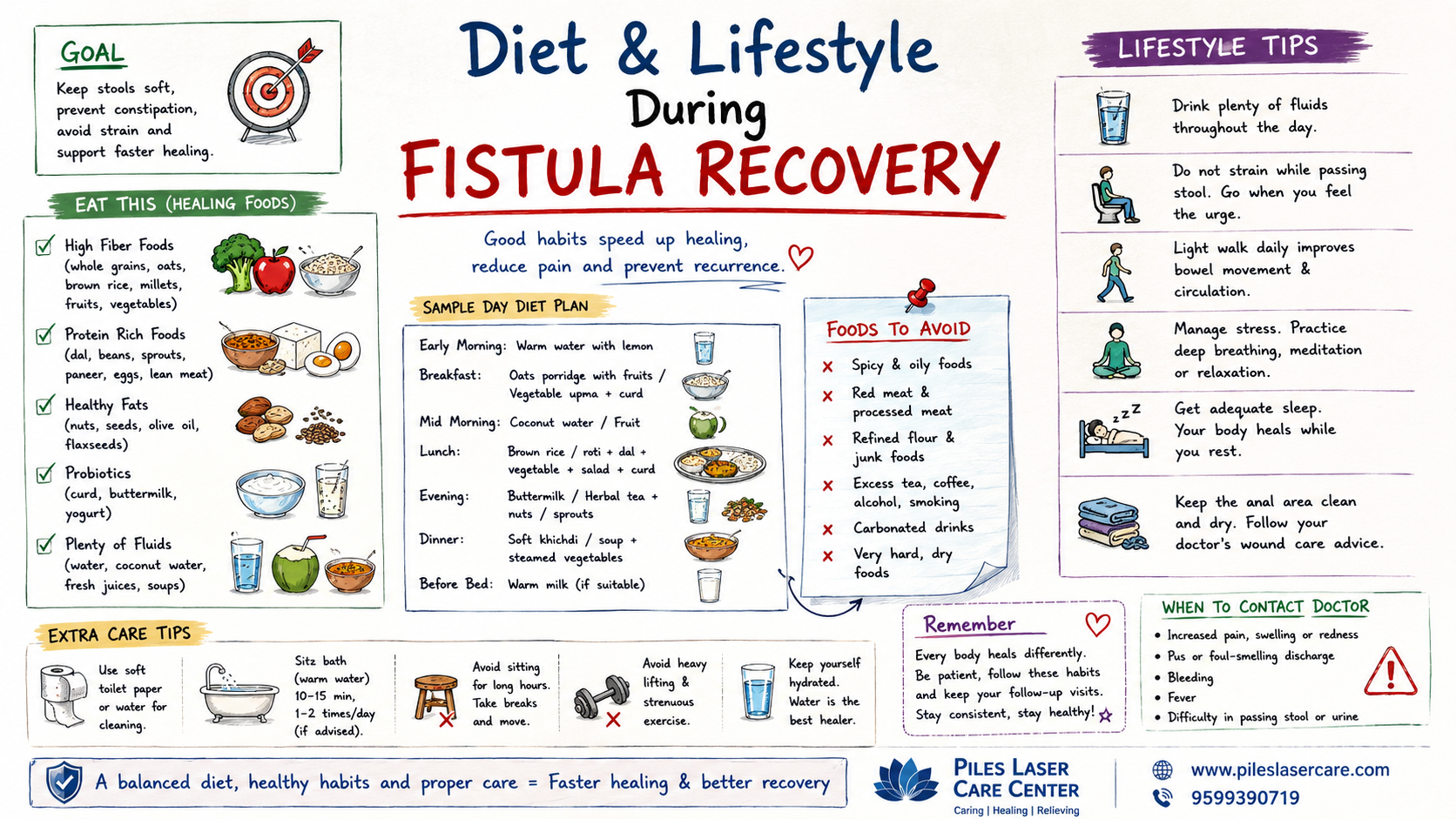
There is no special diet that cures an anal fistula.
A generally balanced diet with adequate fibre and fluids can help maintain softer stools and reduce straining, provided there is no medical reason to restrict fibre or fluids.
Good bowel habits may include:
- Drinking adequate water
- Eating fibre-rich foods
- Avoiding unnecessary straining
- Responding to the urge to pass stool
- Maintaining regular physical activity as tolerated
Diet supports bowel health but does not close an established fistula tract.
Important Facts About Anal Fistula
Fact 1: An anal fistula is different from piles and fissures.
Fact 2: Many anal fistulas develop after an anal abscess.
Fact 3: A fistula can have an external opening and an internal opening.
Fact 4: Recurrent drainage or abscess formation should not be ignored.
Fact 5: Treatment depends on the fistula's anatomy.
Fact 6: Protecting the anal sphincter and maintaining continence are important treatment considerations.
Fact 7: MRI can be particularly valuable in complex or recurrent fistulas.
Fact 8: No single fistula procedure is suitable for every patient.
Fact 9: Laser treatment may be an option for selected patients, but it should not be presented as universally appropriate.
Fact 10: Proper diagnosis and individualized treatment planning are essential.
Frequently Asked Questions
Is an anal fistula dangerous?
An anal fistula is not usually an emergency by itself, but it can cause recurrent infection and abscess formation. A painful, swollen area accompanied by fever or systemic illness requires prompt medical attention.
Is an anal fistula painful?
Pain varies. Some fistulas cause little pain and mainly produce discharge, while others become painful when the tract is blocked or an abscess develops.
Does every anal abscess become a fistula ?
No. Some abscesses heal after appropriate treatment without developing a persistent fistula.
Can antibiotics cure an anal fistula ?
Antibiotics may be necessary in selected situations, particularly when there is infection or an underlying condition requiring medical treatment. However, antibiotics alone generally do not eliminate the established fistula tract.
Can a fistula be treated without surgery ?
Some minimally invasive techniques exist, but an established anal fistula often requires a procedure to achieve definitive treatment. The appropriate approach depends on its anatomy and the patient's circumstances.
Is laser fistula treatment suitable for everyone ?
No. Laser treatment is one of several available approaches and is most appropriate for selected fistulas after proper assessment.
Can an anal fistula turn into cancer ?
Cancer arising in a chronic anal fistula is rare, but longstanding or unusual fistulas require appropriate medical evaluation, especially when symptoms change or become atypical.
Can I live normally with an anal fistula?
Many people can continue their normal activities, but persistent discharge, recurrent abscesses and discomfort can affect quality of life. Appropriate evaluation can help determine the best treatment.
Final Takeaway
An anal fistula is a persistent abnormal tract connecting the anal canal or rectum with the surrounding skin, commonly developing after an anal abscess. Because fistulas vary significantly in their anatomy and relationship with the anal sphincter, diagnosis and treatment should be individualized.
Modern management includes several options, ranging from fistulotomy and seton-based treatment to sphincter-preserving procedures such as LIFT, advancement flap and selected minimally invasive or laser techniques.
If you notice recurrent pus discharge, a persistent opening near the anus, repeated swelling, or recurrent abscesses, do not assume that the problem is piles or a fissure. A proper examination by a qualified colorectal or anorectal specialist can establish the diagnosis and help determine the most appropriate treatment.
Medical disclaimer: This article is intended for general educational purposes and does not replace examination, diagnosis or treatment by a qualified healthcare professional. Treatment decisions should be made after an appropriate clinical assessment.

Have these symptoms? Get checked early.
Book a private consultation with Dr. Amar Kumar at your nearest centre.
Book appointment